
Yiwu Market Insights
Yiwu Market Districts by Product Category: A Buyer’s Map
Which district to visit for which products — and how to plan a route that saves time in the world’s largest small-commodity market.
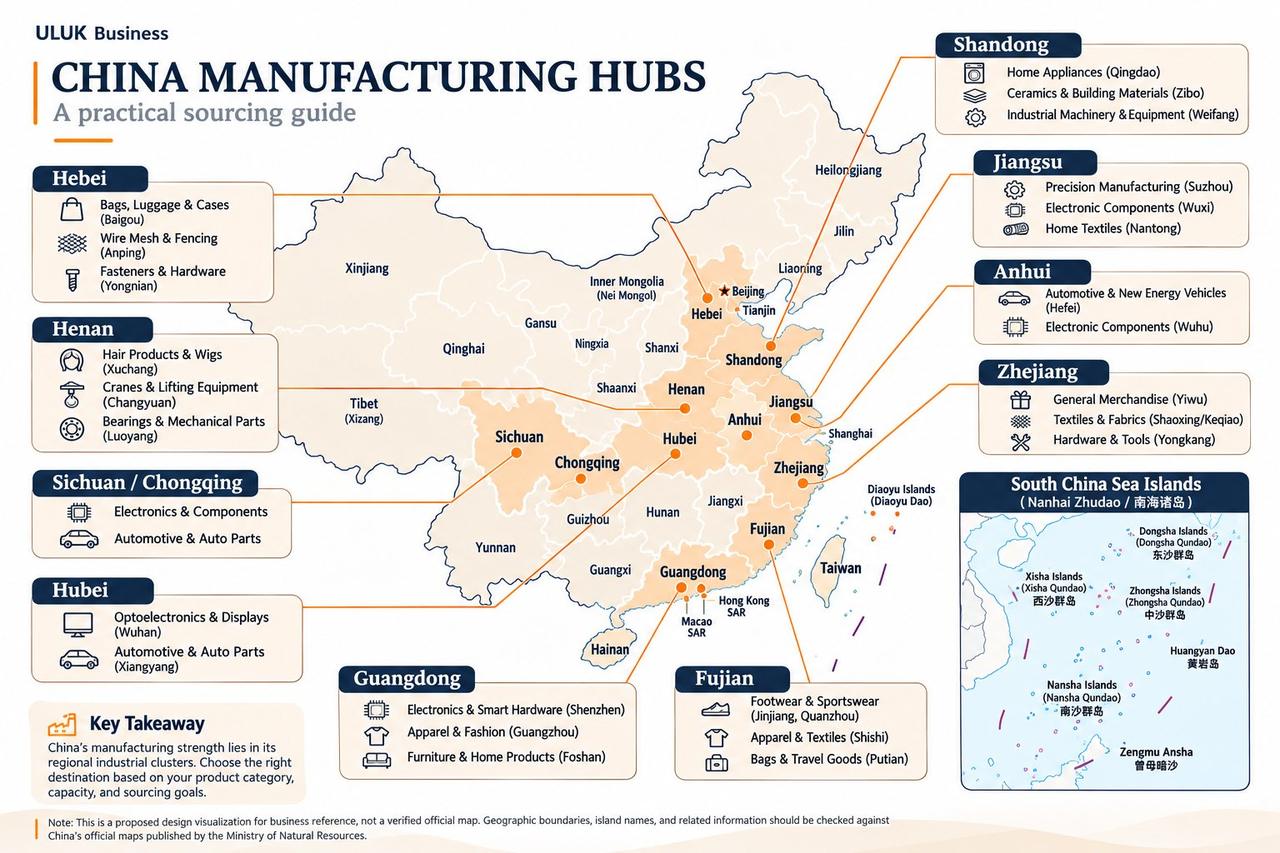
Yiwu is not one market with a few thousand shops. It is a large, organised complex divided into districts and categories, and the difference between an efficient trip and an exhausting one is usually knowing where to start.
This guide explains how the districts are organised, which categories are commonly found in each, and how to plan a route that matches your product list. Layouts and tenant mixes do change, so treat this as a planning map and confirm the current directory when you arrive.
1. How the Market Is Organised
The International Trade City is arranged in districts, with related product categories grouped together and further divided into blocks and floors. Many stall owners also work with nearby factories, so a market visit can cover both trading and production discussions in the same area.
A useful way to prepare is to list your target products, mark the likely district for each, and then group visits by area rather than by supplier name. Walking between unrelated categories can consume half a day.
2. Category Map at a Glance
| Area | Categories commonly associated with it | Best for |
|---|---|---|
| District 1 | Toys, gifts, crafts, jewellery, artificial flowers, stationery | Small general merchandise and promotional items |
| District 2 | Hardware, electronics, bags, shoes, hats, watches, umbrellas | Everyday accessories and mixed hard goods |
| District 3 | Office supplies, cosmetics, packaging, buttons and zippers, luggage, leather goods | Packaging, components and light consumer goods |
| District 4 | Textiles, socks, knitwear, automotive accessories, household goods | Soft goods and daily-use products |
| District 5 | Imported goods, higher-end displays, international trading services | Product inspiration and cross-border sourcing support |
Use this as a starting point, not a guarantee. Ask the official information desk or your local host to check the current floor plan before you commit to a route.
3. Plan by Category, Then by Supplier
Instead of chasing one named stall, write a shortlist of products with target price bands and minimum quantities. Give that list to your local guide, who can identify several comparable stalls in the same block. Visiting three suppliers selling the same category back to back makes price and quality differences obvious in a way that isolated meetings do not.
- Photograph products and tags, but always ask permission first.
- Record the stall number, not just the business card — cards are easily mixed up.
- Ask whether the stall is trading stock or representing a factory; the answer changes pricing and customisation options.
- Request a quotation against the same specification from every supplier you visit.
4. Combine Market and Factory Visits
The market is excellent for discovering products, comparing ranges and understanding price levels. A factory visit answers a different set of questions: production capacity, quality control, materials and lead time reliability. If your product needs customisation, plan both. A shortlist from the market in the morning and a factory discussion in the afternoon is a common and productive pattern.
Allow time for sample collection and courier arrangements. Samples gathered on day one can be shipped while you continue visiting on day two, so they are waiting when you return home.
5. A Two-Day Route Example
- Day one morning: your primary category district, three to five comparable stalls, price and MOQ notes.
- Day one afternoon: packaging and accessory categories that support your main product.
- Day two morning: follow-up meetings with the shortlist and a factory or showroom visit.
- Day two afternoon: sample collection, courier booking and final quotation review.
Two focused days usually produce better results than four unfocused ones. Leave a free block at the end for the supplier you did not expect to find.
6. Practical Tips Before You Go
Wear shoes you can walk in, bring a small notebook and a power bank, and keep a digital copy of your product list. Carry a Chinese version of key product names — translation apps do not always handle specialist terms well. If you are serious about sourcing, arrange a bilingual companion who knows the market rather than relying on a general interpreter.
Frequently Asked Questions
How is Yiwu International Trade City organised?
It is divided into districts, with related categories grouped together and then split into blocks and floors. Planning your visit by category and area is more efficient than visiting named stalls scattered across the complex. Confirm the current directory on arrival because tenants and layouts change.
Which district should I visit for packaging and accessories?
Packaging, buttons, zippers and similar components are commonly found in the area associated with office supplies and light manufactured goods. Because stock changes, send your product list to a local host who can identify the right block before you travel.
Can I visit factories near the Yiwu market?
Yes. Many stall owners work with nearby factories, and some can arrange a same-day factory discussion. A market visit is best for product discovery and price comparison; a factory visit answers questions about capacity, materials and quality control.
How long should I spend in Yiwu?
Two focused days usually produce strong results: one for category comparison and shortlisting, one for follow-up meetings, samples and quotations. Add a half day if you also want a factory visit outside the city.
What should I prepare before a market visit?
Bring a shortlist of products with target prices and quantities, the Chinese names or characters for key items, comfortable shoes, a notebook and a power bank. Ask permission before photographing products, and record stall numbers as well as business cards.
Visit Yiwu With a Clear Route
Our local bilingual team builds category-based market routes, arranges factory visits and handles interpretation and sample follow-up. Send us your product list and we will map the districts worth your time.